

Thesis Anna Feu
The sheer number of religious monuments existing in Catalonia makes it difficult to keep them in good condition, and often the proposals to repair damage or to reverse the poor condition of these buildings are very expensive. In addition, the scarcity of funding from governmental bodies and religious institutions makes it impossible to assume the cost of such work. As a result, those buildings are often left to decay. This situation becomes more severe for baroque churches, where the use of Catalan vaulted ceilings and folded tiled domes, their construction and their structural behaviour are not understood. As a consequence, the conservation of these vaults and domes and the monumental integrity of the temples are endangered; and unnecessary demolitions or oversized repairs often take place. During the 18th century in Catalonia, many churches were built and several Romanesque and gothic temples were refurbished. In Lleida and Tarragona, thanks to the increase in the numbers of people who produced and sold distilled liqueur and olive oil, churches of monumental sizes were built, and their designs were even exported to the New World.
This doctoral thesis clarifies the construction methods used for 18th-century churches, the structural behaviour of these buildings, and the ways in which they were stabilised. For this purpose, we provide a review of historical texts, compile fieldwork data, analyse structures, and assess the damages sustained by more than 120 churches. Finally, we present the appropriate criteria and methodology to be used for the successful restoration of these churches.

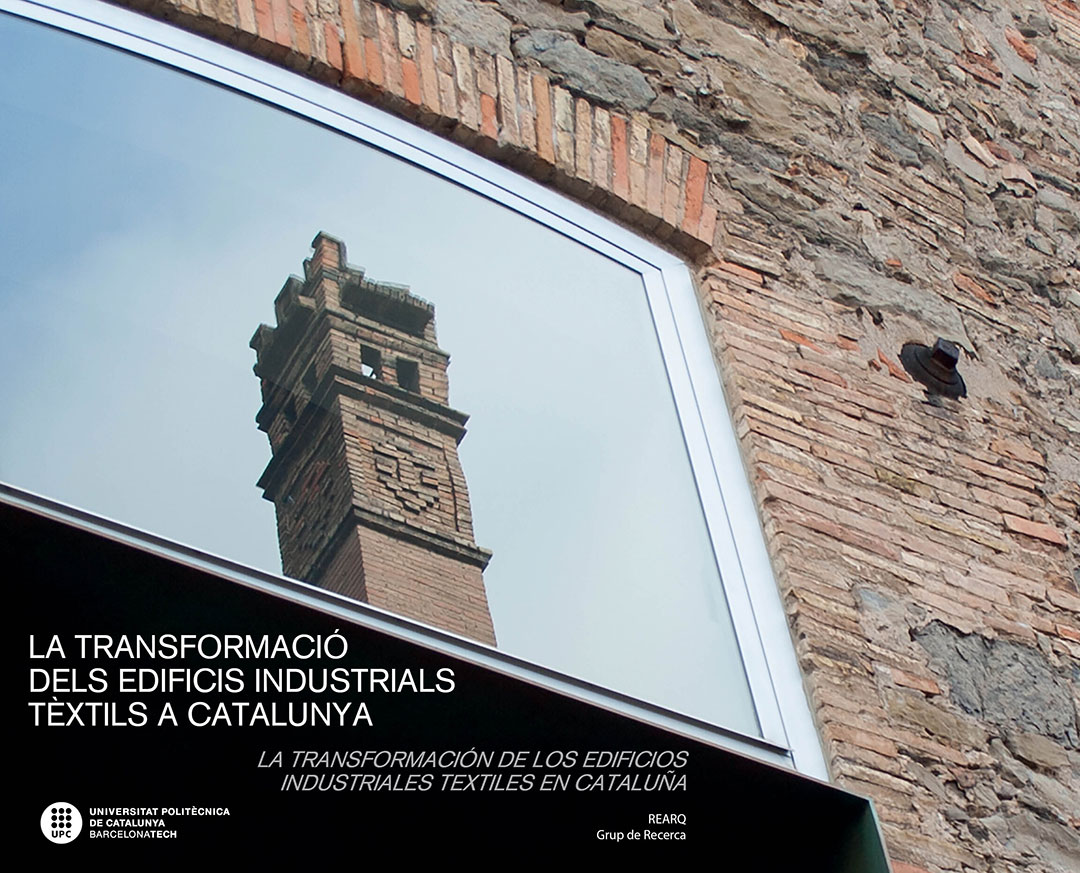
Publication REARQ
The great textile boom that took place in Catalonia between the second half of the 19th century and the first decades of the 20th century led to the construction of a substantial number of buildings with similar characteristics that were used to manufacture textile products. Later on, due to a series of crises and their own functional obsolescence, many of the large premises of these buildings became sites with potential for new uses.
This publication brings together some of the interventions carried out on these old factories, involving different, and in some cases, surprising changes to their original use. The aim here is to show the way in which these interventions have been carried out and to explain the intentions and strategies behind them, for a better understanding of the key aspects of the refurbishment work. At the same time, we wish to highlight the remarkable adaptability of these old factories to new needs. These buildings are characterised by the geometric clarity of their volumes, the rigour of their structural systems and the use of suitable materials that have stood the test of time.
© 2025 Feu i Godoy Arquitectes SLP Legal Notice Privacy Policy Cookies Policy
